Thanks again to isabella at moritherapy and her post about Mental Health Camp, I’ve been reading Louise DeSalvo’s Writing as a Way of Healing
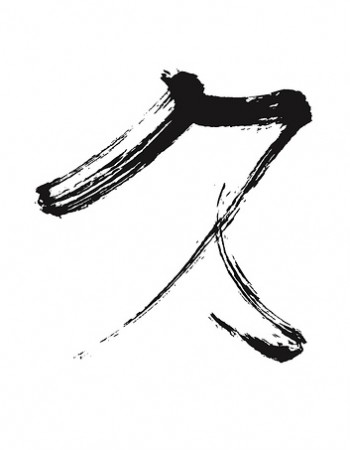
Her own breakthrough in becoming a professional writer started when she discovered a demanding form of Japanese painting that grows out of the Zen tradition. It requires that the painter prepare by achieving an inner balance and “emptiness” that allows total concentration on the creative act. The painting itself is achieved with a series of strokes in one sitting that permits no changes. This is an art requiring an inner harmony cultivated through spiritual practice and a balance in all aspects of life.
There’s a similar tradition in the Chinese art of calligraphy, as explained in a beautiful book – The Way of Chinese Painting

What DeSalvo drew from studying this tradition was that writing was not separate from life but an integral part of it. She felt a healing power through the detachment she achieved during the creative process that allowed her to observe difficult and destructive thoughts and feelings without being overwhelmed by them. Instead she could write about those feelings and explore in detail the most wrenching experiences of her life. The detachment she achieved helped her come to terms with the issues that had long troubled her and interfered with her writing. She found that this healing effect, repeated on a daily basis, strengthened the resilience needed to survive emotional shock.
To help others get past their fears, she developed many practical suggestions – which she calls her yoga of writing – about how to structure time, set realistic goals, remove fear about completing a long project by consistently doing small parts of it each day. The basic idea she conveys is that writing is an achievable practice, an integral part of living, rather than a separate reality requiring inspiration or special talent that one must be born with.
She mentions Janet Frame, the New Zealand fiction writer, who provides, I think, the most amazing example of someone who used the healing power of writing to end her mental and emotional turmoil. After years of breakdown, therapy and voluntary hospitalizations, she was wrongly diagnosed as schizophrenic and subjected to electroconvulsive therapy. She was also scheduled for a lobotomy, which would certainly have destroyed her creative powers, but avoided that procedure because of the great critical acclaim that greeted her first book of stories. She went on to write a series of novels, stories and autobiographies that helped her resolve the emotional legacy of her most difficult life experiences.
DeSalvo’s description of what happens during the writing process brought to mind two books by Anthony Storr, which I mentioned in an earlier post – The Dynamics of Creation

Storr compares the creative state to one of Carl Jung’s key therapeutic methods – active imagination. Jung urged his patients with mood and personality problems to spend time writing, painting, modeling clay or other form of creative expression. He observed that this brought them to a mental and emotional state where they stood apart from thoughts and feelings and could avoid being overwhelmed by them. This “active imagination” also induced a kind of free association that permitted new insight. Conscious and unconscious thoughts and symbols came closer together, and links could be made between areas of experience never previously related to each other.
For some of his patients, this led to dramatic breakthroughs in which they could achieve complete relief from disorders, such as depression, and help the mind and body return to what Jung thought of as a self-regulating condition. The organism as a whole, he believed, normally achieved a balance between extremes through a self-regulatory process, just as the biochemistry of the body returned to the optimum point – such as the system for maintaining a fixed body temperature or the appropriate level of oxygen in the blood. The breakthroughs achieved seemed not to have external causes but to come about through a deep inner change of attitude.
Observations like these led Abraham Maslow
Jung and Maslow were concerned with the creative state itself as a mental activity that contributed to human fulfillment. They were not looking beyond that to the completion of a particular work of art. For Louise DeSalvo, however, experiencing the full healing power of creative expression involves not just the act of writing itself but also the ordering and support of daily living that leads to the finished work. That achievement brings creative expression into the larger context of life as a whole. She emphasizes that the healing practice of writing can be shared by many, not just the most accomplished artists. It is a way of life that can be learned.
That leads me to ask this question: To what extent have you been able to integrate writing or other imaginative work into a “yoga” of daily practice? What I have found so difficult over the years is integrating the practice of writing with all the other needs of work and family. What’s your experience of finding that balance?
Image: Some Rights Reserved by cmykcellist at Flickr
Related Posts
- Writing, Creativity and Healing
Some Rights Reserved by tore_urnes at Flickr Thanks to isabella, and her recent posts on…
- Creativity: Is Writing Safe?
Depression shuts down creativity so completely that I think of these two as polar opposites.…
 Revisiting: Writing Through Depression
I’ve tried to use the creativity of writing to engage depression, to take away its…
Thank you for writing. I am finding it engaging to read. It is hard to be engaged when you are depressed. I have read DeSalvo’s book. I will reread many times I am sure. I used to write poetry when I was depressed as I look back on some of the poetry I can see the many issues I was working through. I do not write as much when I am not depressed. There is much I want to write about but writing does not come easily for me. Therefore, I appreciate all the more the talent I see in your writing.
Thank you, Kathy –
That’s so kind of you to say. Your experience has different from mine since I tend to get mentally glued or else blank out entirely as a writer when depressed. I’m sure it is helpful to look back on those poems. Have you tried jotting down anything by way of notes about what you’re feeling when down? Being able to write anything has often settled me down enough to get through the rest of the day.
My best to you — John
Your posts have been helpful. I purchased DeSalvo’s book that you recommended. I have written in journals and poetry when having a difficult time. It has helped but I think some of the advice in DeSalvo’s book will help the writing be more helpful for me. The book has given me ideas for several additional topics to explore, in addition to some material I have been writing for my children, my greatest gift in life.
Kathy –
I’m glad the posts have been helpful to you. There is so much inspiring and also quite practical material in DeSalvo’s. It has many ideas I’m trying myself – one of the best books on writing I’ve found.
Thanks for coming by.
John
What a nerve this posting hit! The story of my life, in a nutshell – trying to balance the creativity, and the total NEED for it, with the business of actually living. What I am learning – sadly, very belatedly – is that you can become hooked on the idea of any one of the myriad things that fill our time as the ‘culprit’: if I didn’t have to work, I could write; if I didn’t have a family I’d be free to go and study; if only things would ‘settle down’ I could start attending to what I know is the biggest missing ingredient in this struggle to ‘be well’. And what is the real point – remove any one of these, or even all of them, and you are not thereby in a state to attend to the creativity that is crying out to help heal you. In my experience, depression leaves a calling card in the form of near-unconscious thoughts that nothing is really worth it, nothing will really work, and you don’t deserve it anyway. This is far from normal procrastination. I experience this as myself putting a barrier in the way of my self moving to where I need to move. And for me, it is only when medication is working effectively that I begin to be in a position to address this need – I always wonder if I am just a wimp, and all these people who seem to achieve results without medication really do feel as bad as I do, or (which is bad enough) as I feel when the medication starts to take effect. It seems hard to maintain an idea of what is my ‘really OK’ position when I’m not in it. When I am in it, I am quite quite sure that the state of my moods/mind/emotions, as it is too much of the time, is NOT OK. I really wonder whether others suffer in this way – of suspecting the suffering of being really a state of irredeemable wimp-hood?
Jean –
That sounds so familiar – finding an external culprit. For so long I thought the issue was balancing work and writing when the problem was always depression and everything that went with it. That took inner work, not this spinning myself these “if only…” stories. I like the image of a calling card – this is all so well put!
Don’t think of yourself as wimpy, though. Who knows what others can do with or without medication. What works for you is what counts, and it takes a lot of inner strength to take any steps toward healing at all.
All my best to you — John
John,
I have only discovered your blog and am inspired, impressed and challenged. I have bookmarked it and subscribed and look forward to reading it more in-depth when I am in the ‘mood’ and can absorb some of it. Right now I can only surface read. Maybe tomorrow… I too have had the revelation that writing is therapeutic. Since I have always loved writing, it has been an easy transition to make it a bigger part of my life. I am loving it! Presently I am working on some articles, a novel, and my blog. It is all so therapeutic and I want to do little else. I am looking forward to becoming part of your community.
Wendy Love
Hello, Wendy Love –
Thank you so much! I’m delighted to have you in the community.
It’s great to hear that you’ve been able to make writing a bigger part of your life. And it must be a very big part, indeed, to encompass articles, blog and a novel. Congratulations!
Writing this blog has probably been the single most important factor in recovering over this past year. I hope it’s had that same effect on you.
I look forward to reading your blog.
My best to you — John
Your writing and your blog are as beautiful as always.
*hugs*
Thank you, and Hello again!
It’s good to have you back. I’ve been worried at your absence from your blog – I’ll have to check it out again.
Hugs to you too.
John
John – Wow. Your posts are very informed, informative and thought provoking. To answer the question you pose: I am a writer since the age of 7, so it was only natural for me to write about my mental illness and to document my recovery. When there’s the will, need and desire we find the way to incorporate writing into our daily practice, even if only for 15 minutes at the end of the day.
I’m interested in the comment you left on my blog, PARASITES OF THE MIND. Would you, as a writer, be willing to write about your reunion process in your relationship? Would you be willing to reflect on what worked and helped you achieve such a happy outcome? My blog hosts a weekly feature, ‘Survivors Speak’ that would be a natural fit for your wisdom.
Michele – Thank you – it’s always a great lift to know that a post helps in some way.
Starting to write at age 7 is pretty young. That’s about when I at least formed the dream of being a writer. It’s also about the time, depression set in, though it would be 20 years before I paid attention to that word – and another 15 years or so before I could begin to write about it. I still have trouble with daily practice – but it would have helped to instill the discipline that didn’t come until fairly recently. You’re right about the will especially. What DeSalvo drives home to me is the need to give up other things and give the will and need some room to work.
Thanks too for your invitation – that’s an honor. I’ll respond by email.
John
For me journalling really works. I only do it when I really need to examine something – rather than a regular time.
Hi, Evan – That’s the way I’ve done it too. The one time I tried something everyday was after reading one of Julia Cameron’s books. The Morning Pages idea really helped me get into writing again and also recording more about mood changes. That’s what got me into blogging. Since then, blogging has taken the place of everything else.
Thanks for coming by — John